
How to Help Prevent Hairballs Naturally in Indoor Cats
Practical daily habits — from regular brushing and hydration to malt pastes and high-protein hairball bites — that help swallowed fur pass comfortably.
Why do indoor cats develop hairballs?
Cats spend a large part of every day grooming themselves. Their rough tongue catches loose fur, which is normally swallowed and passes through the digestive tract.
During seasonal shedding or periods of stress, extra hair can accumulate in the stomach and form hairballs instead of passing smoothly.
Three practical daily habits
Combining gentle grooming with targeted functional nutrition makes the biggest everyday difference.
- Brush your cat 2–4 times per week (daily during shedding seasons) to remove loose undercoat before it is swallowed.
- Encourage hydration with fresh water bowls in quiet spots away from food.
- Add a malt & taurine anti-hairball paste or crispy anti-hairball bites to your cat's daily routine.
Frequently Asked Questions
Yes — many cat owners offer paste a few times a week and crispy bites as a daily reward, adjusting total treats to their cat's daily diet.
Recommended Products
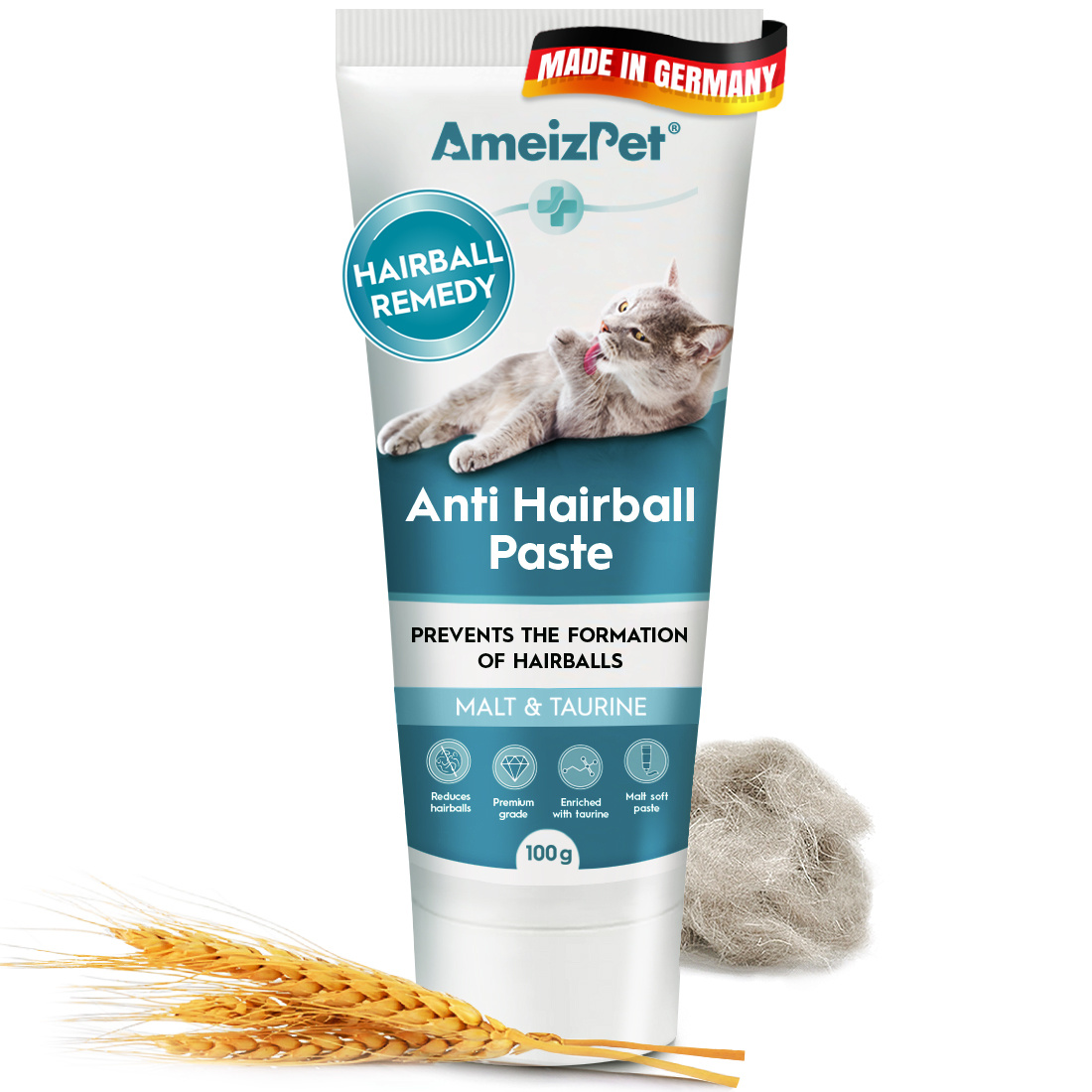
Made in Germany
3 variations100 g
Cats · pasteAmazon.co.uk
Anti Hairball Paste
Soft malt paste in 3 flavours (Malt, Cheese, Cat Grass) to support natural hairball passage.
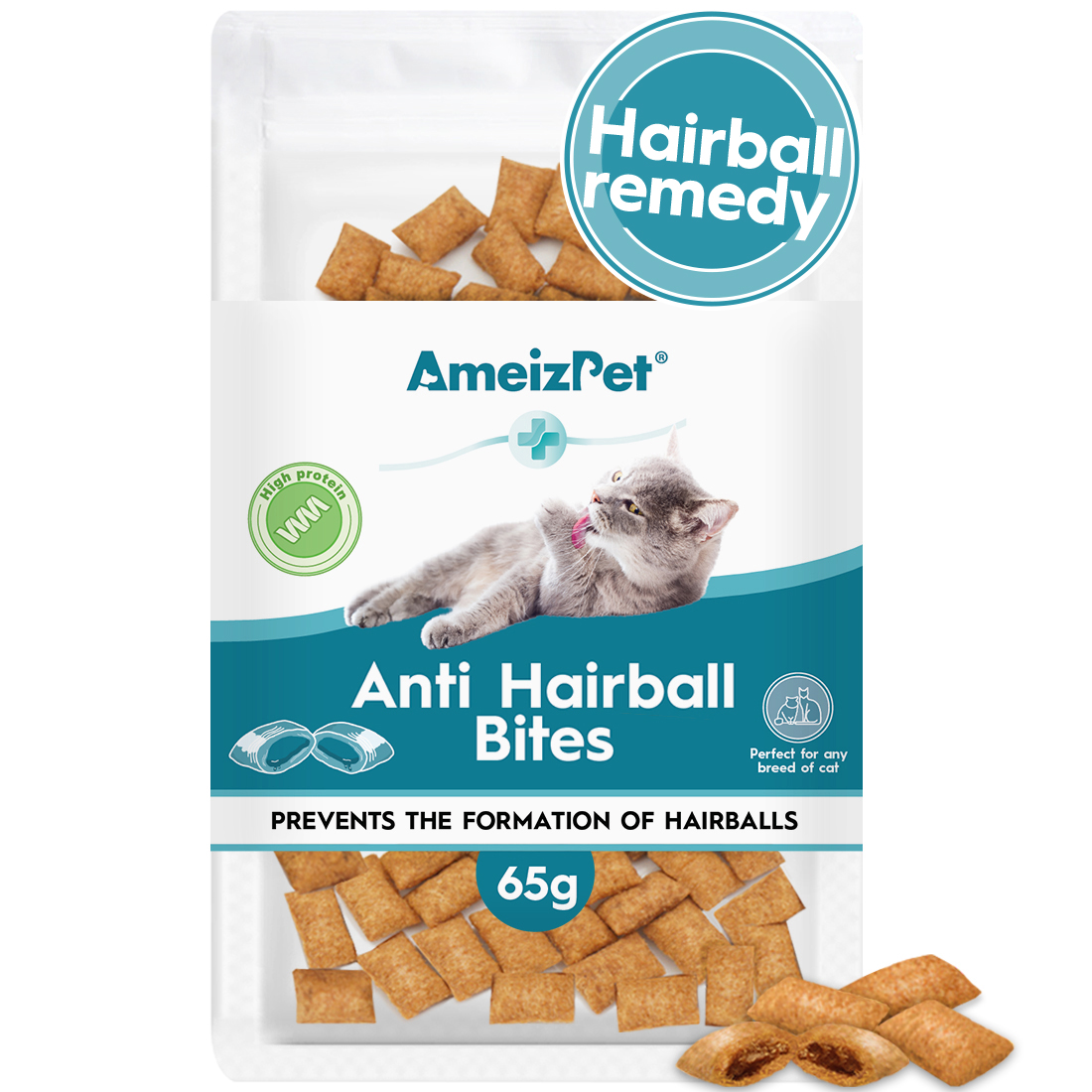
65 g
Cats · bitesAmazon.co.uk
Anti Hairball Bites
Crispy high-protein pillow treats with creamy hairball-remedy filling for any breed of cat.